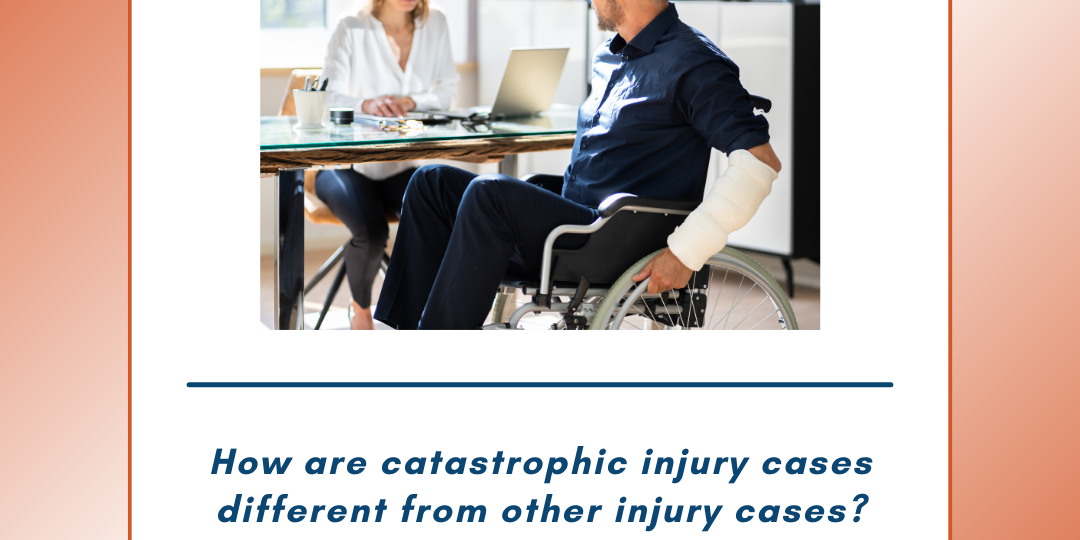
Catastrophic injury cases differ from other types of injury cases primarily in terms of the severity of the injuries involved, the impact on the victim’s life, and consequently, the legal and financial considerations that come into play. Here are some key aspects that distinguish catastrophic injury cases:
1. **Severity and Nature of the Injuries**: Catastrophic injuries result in long-term, often permanent, disability or disfigurement. Examples include spinal cord injuries, traumatic brain injuries, severe burns, and amputations. These injuries significantly impair the victim’s ability to lead their pre-incident life, affecting basic daily activities, employment, and quality of life.
2. **Medical Costs and Care Needs**: The medical expenses associated with catastrophic injuries are typically very high and ongoing. Victims may require multiple surgeries, long-term rehabilitation, specialized medical equipment, and round-the-clock care. The financial burden can be overwhelming, far exceeding that of less severe injuries.
3. **Impact on Employment and Earning Capacity**: Catastrophic injuries often prevent victims from returning to their previous jobs or from working at all. This loss of earning capacity, both current and future, must be accurately calculated and claimed in the lawsuit to ensure the victim’s financial security.
4. **Life Care Planning**: Given the long-term or permanent nature of catastrophic injuries, victims may need a life care plan. This plan is a detailed, organized approach for the current and future medical and non-medical needs of the victim, including accommodations for living with a disability. These plans are often developed by medical professionals and can be a critical component of the legal strategy in catastrophic injury cases.
5. **Legal Complexity and Damages**: Catastrophic injury cases are legally complex and typically involve higher compensation claims than other injury cases. The calculation of damages must consider not just the immediate medical expenses and lost wages, but also long-term costs, pain and suffering, loss of life’s enjoyment, and sometimes punitive damages. Proving these damages often requires testimony from medical experts, economists, and life care planners.
6. **Insurance and Liability Issues**: Given the high stakes involved, insurance companies often aggressively defend against catastrophic injury claims. There may be disputes over liability and coverage limits, necessitating skilled negotiation or litigation to achieve a fair settlement.
7. **Psychological Impact**: The psychological effects of catastrophic injuries—such as depression, anxiety, and PTSD—can be profound for both the victims and their families. Compensation for mental health treatment and emotional distress is a crucial component of these cases.
Catastrophic injury cases are more complex due to the severe impact on the victim’s life, the high costs associated with care and adaptation, and the intricate legal strategies required to secure just compensation. Legal representation by attorneys with specific experience in catastrophic injury law is often essential to navigate these challenges successfully.